Cynus Chess Robot: a Chess Board With a Robotic Arm
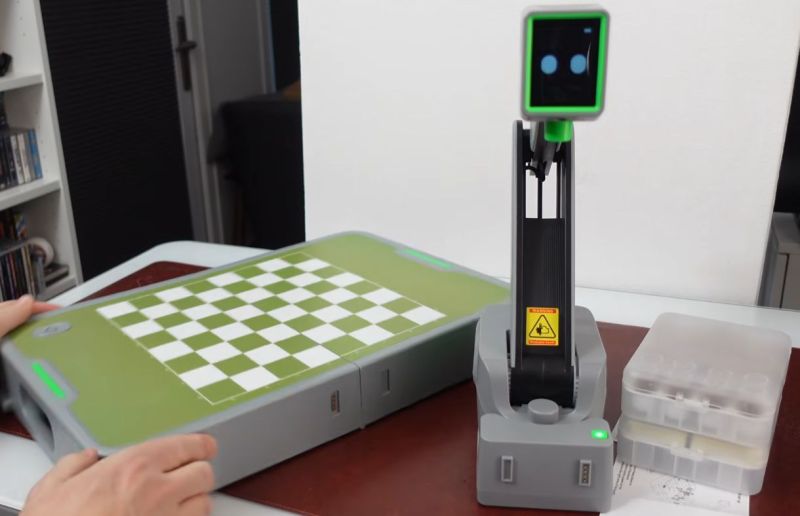
There are many chess robots, most of which require the human player to move the opposing pieces themselves, or have a built-in mechanism that can slide the opposing pieces around to their new location. Ideally, such a chess robot would move the pieces just like how a human would, of course. That’s pretty much the promise behind the Manya Cynus chess robot, which [Matt] over at the Techmoan YouTube channel bought from the Kickstarter campaign.
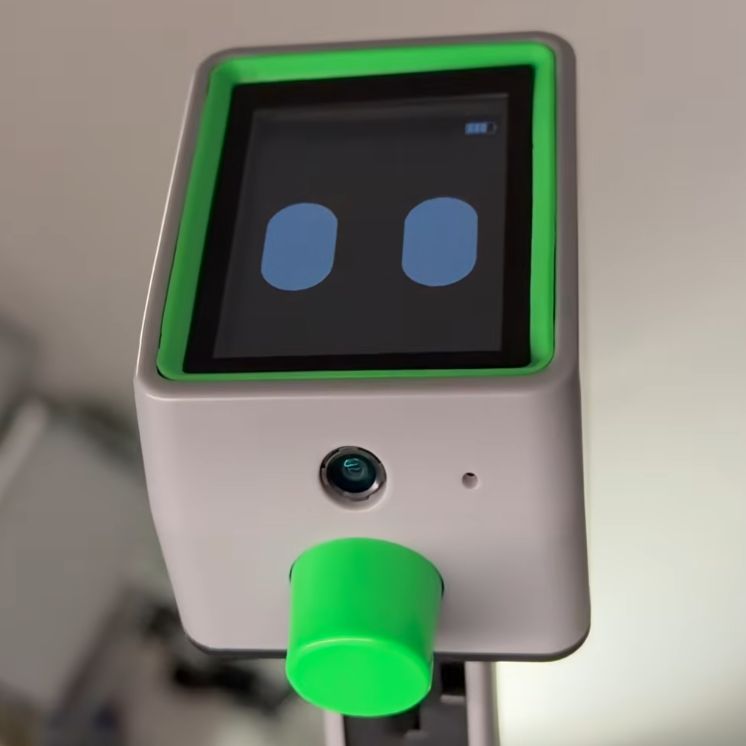
Advertising itself as a ‘Portable AI Chess Robot’, the Manya Cynus chess robot comes in the form of a case that unfolds into a chess board and also contains the robotic arm that contains the guts of the operation. Powered by the open source Stockfish chess engine, it can play games against a human opponent at a few difficulty levels without requiring any online connectivity or a companion app. It moves its own pieces by picking up the metal-cored chess pieces with its arm, while its front display tries to display basic emotions with animated eyes. A 3-MP downward-facing camera is located on the head section, along with a microphone.
As for how well it works, [Matt] isn’t the best chess player, but he had a fair bit of fun with the machine. His major complaints circle around how unfinished the firmware still feels, with e.g., invalid moves basically ignored with only a barely visible warning popping up on the screen. In general, he’d rather classify it as an interesting development kit for a chess robot, which is where the BLE 5.1-based interface and a purported Python-based development environment provided by Manya seem to come into focus.
From the site, it’s not clear where this documentation and software can be found, and the chess robot appears to be fully sold out on the Kickstarter page. In addition to this, a promised companion app seems to have gone AWOL, too.
With no clear support or even availability, it would seem that this is less of a crowdfunding scam and more of a confusing product which may or may not become available again, yet which could perhaps provide inspiration to some DIY projects, as the basic principle seems sound enough. Or, keep it simple and use a gantry.
from Blog – Hackaday https://ift.tt/APkusdC


Comments
Post a Comment